Blog › Filming
Filming a beach volleyball match
A beach volleyball court is small: a single phone is enough to show everything. The framing is easy. The hard part is the light on the sand, the wind and the dust. Here is how to tame them.
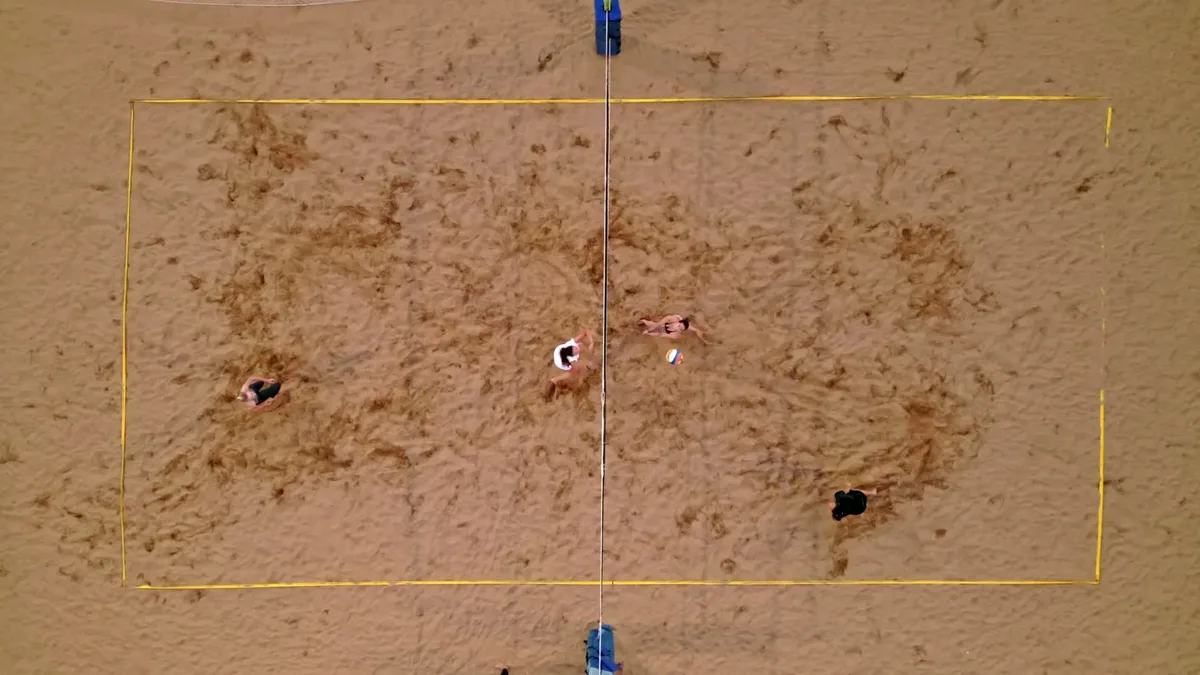
“How do you film a beach volleyball match?” The results are mostly about rules and playing technique, almost never about the video a coach or a player can shoot themselves. Here is what works, with a simple phone.
Where to put the phone
The court measures 16 metres by 8: it fits entirely in a wide shot. The right spot is up high, in line with the net, behind an end line: you see both sides, the net and the depth of the court. From the side, right at sand level, the players on the other side hide behind those on the first. The principle is the one in where to put the camera: height matters more than equipment. A stepladder, a referee's chair or the top of a dune does the job very well.
The sun and the pale sand
Sand reflects a lot of light: on a phone in automatic mode, the picture quickly becomes too bright, and players in dark shirts turn into silhouettes. A few things help:
- Back to the sun: position yourself so the sun lights the court in front of the lens, never facing it.
- Locked exposure: press and hold on the screen to lock focus and exposure on the centre of the court, then lower it a little if the sand looks white.
- A sunshade or a cap above the screen: to frame the shot, you need to see what you are filming.
Wind, sand and heat
A light tripod sinks into the sand and moves in the wind: spread the legs well, push them in, and weigh it down with a bag. Keep the phone away from fine sand, for example in a clear pouch, and do not leave it for hours in full sun: a phone that overheats ends up slowing down or switching off. A power bank avoids stopping in the middle of a set.
A two-against-two match
In beach volleyball, each player touches the ball far more often than indoors, and rallies follow each other quickly. A fixed wide shot keeps everything: the reception, the set, the attack and the repositioning. Zooming live makes you lose the next rally. It is better to film wide and enlarge what matters when reviewing.
What to look at when reviewing
- The serve: where it lands, and which player the opponent keeps targeting.
- The reception: the player's positioning and the quality of the first ball.
- The signals and the movement: who covers what behind the block.
- The attack choice: the diagonal, the line or the placed shot, depending on the wind.
For the method, one question per sequence is described in running a video session players really listen to. And if you come from indoor volleyball, analysing a volleyball match gives you the common reference points.
Reviewing and sharing the clips
With TactiCam, you film the match from the phone resting on its tripod, then find the rallies in the Video Room. You draw an arrow or a zone on a clip, add a sentence, and your partner sees it on their own phone. To cover a court from two sides, Multicam syncs two phones. The trial lasts 14 days, with no credit card.
Frequently asked questions
Where should you put the camera to film a beach volleyball match?
Up high, in line with the net, behind an end line. The court is small: a wide shot shows both sides and the net.
How do you avoid an image that is too bright on the sand?
With your back to the sun, locking focus and exposure on the centre of the court, and lowering the exposure a little if the sand looks white.
Can you film a beach volleyball match with a phone?
Yes. A recent phone on a small tripod, well weighed down against the wind, films the whole court in a single shot.
How do you protect your phone from sand and heat?
In a clear pouch, in the shade when possible, with a power bank so it does not stop in the middle of a set.
By sport: Beach volleyball · Volleyball · Padel
Read next
Find your rallies and share them
Film with your phone, find every rally in the Video Room and send an annotated clip to your partner. 14-day trial, no credit card.