Blog › Coaching
How to analyse a volleyball match
A set lost 25-21 can hide solid reception and a missed serve, or the other way round. In volleyball, everything is decided in rallies of a few seconds that all look alike to the naked eye. Video is there to tell them apart, provided you know what to look for.
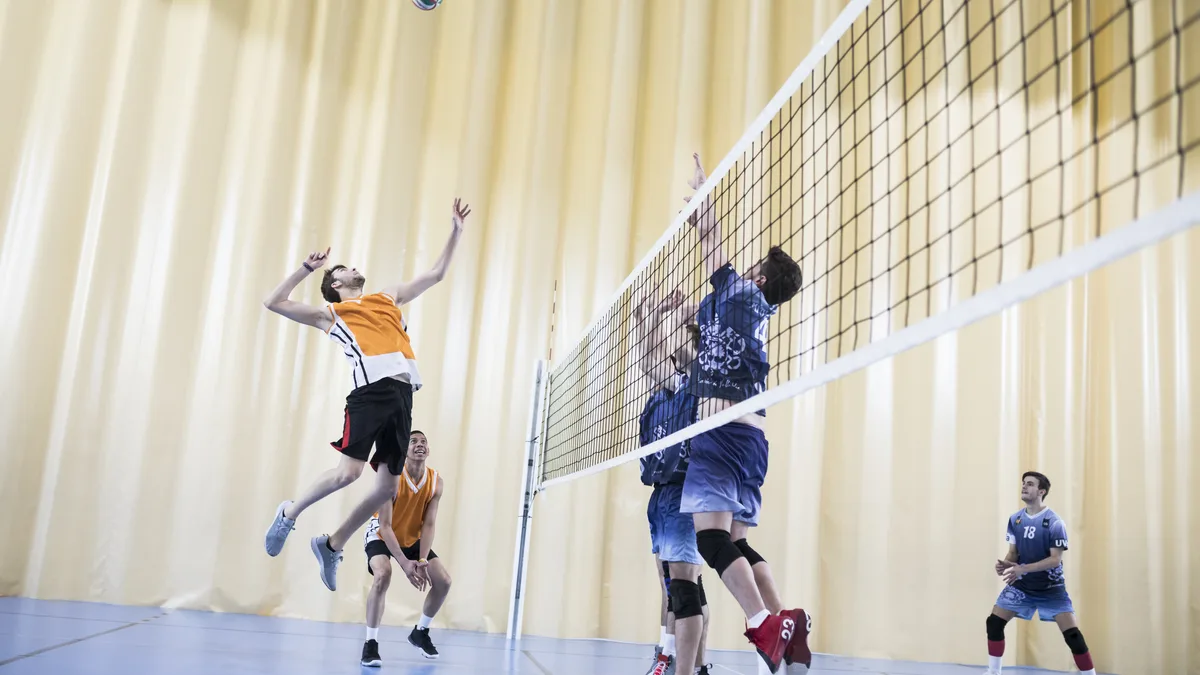
“How do you analyse your matches?” The question comes up regularly among amateur volleyball coaches, and the answers you read are always precise questions: who sets when the setter has played the first ball? What does the team play out of system? Does it try to put up a double block on the outside hitter? That is the right track: you do not analyse a volleyball match, you ask it one question at a time.
Filming from behind, from height
Volleyball is hard to film from the side. From the side stand, the net cuts the court in two, players hide each other, and you see neither the serve trajectories nor the shape of the reception. The right position is behind the baseline, on the centre line, as high as possible: you see your own team from behind, the whole reception line, the set, and the attack leaving for the opposing court.
A phone on a tripod placed in the front row of the end stand, or on the gangway when the hall has one, is enough. The pitfalls specific to halls (flickering lighting, backlight from glass walls) are detailed in filming a basketball match and apply as they are to volleyball.
Start with reception
If you could only look at one thing, it would be this one. An amateur team that receives well can build its attack; a team that receives badly plays every ball in an emergency, and no attacking work will show in matches. The simplest way to measure it is one grade per reception, as practised in many clubs:
- 3: ball on the setter, all attack options stay open.
- 2: the setter has to move, one attack option disappears.
- 1: playable ball, but only as an emergency high set.
- 0: point lost, or ball sent straight back to the opponent.
On the video, the grade takes a few seconds per rally, and after one set you give it without hesitating. The average per player and per zone immediately shows whether the problem is a receiver, a zone of the court or a type of serve. It is a count that judges nobody, in the spirit of do you need statistics in amateur sport.
Reading rotations
Volleyball has a feature no other team sport shares: the team goes through six rotations, and each places the players differently. A match that seems lost “for no reason” is often lost in one or two specific rotations, where the team concedes runs of points while the other four are balanced.
The log is simple: for each point, note which rotation you were in, and who won it. After two matches, the weak rotation stands out. The video then says why (an exposed receiver, a setter starting from too far, a hitter on the wrong side) and that is what you work on in training.
Side-out: winning the point on the opponent's serve
In volleyball, you score by serving, but you win sets by winning the serve back. The point played on the opponent's serve (the side-out) is the one that tells you whether the team knows how to build: reception, set, attack. The point scored on your own serve says something else: the quality of the serve and of the defence. Separating the two in the log avoids the most common misreading, which is working on attack when reception gave way, or on serving when defence did.
Out of system: what the team does when things go wrong
Nice combinations only happen on good receptions. The rest of the match is played out of system: badly received ball, setter who cannot play it, high ball to a wing. In amateur volleyball, that is a large share of the balls. Two questions to put to the video on these rallies:
- Who sets when the setter has played the first ball? If the answer changes every time, nobody on the court knows either. A clear rule can be worked on in one session.
- Does the emergency ball go to a hitter who is waiting for it? A high ball to a wing where nobody is ready to attack is a point given away.
On the block and in defence: look before the hit
As in all sports, the cause of a conceded point lies a few seconds before the moment you remember. In volleyball, it is often at the opponent's set: did the block go with the setter or with the ball? Does the double block form on the outside hitter, or does it arrive late? Are the defenders positioned in the zone the block does not cover? These questions are read frame by frame, on three or four chosen rallies, not on the whole match.
What you show the players
Not the match. Three or four rallies per theme, chosen because they show the same thing, and one successful counter-example. The reception grades stay in the coach's notebook: a player who sees their average displayed in front of the team remembers the grade, and forgets the movement. How to build a short session is described in running a video session that players really listen to.
Frequently asked questions
Where should the camera go to film a volleyball match?
Behind the baseline, on the centre line of the court, as high as possible. From the side, the net and the players hide the reception and the build-up of the attack.
How do you do volleyball stats without software?
A grade from 0 to 3 per reception, the rotation and the winner of each point, on a sheet or a spreadsheet. That is enough to find the weak rotation and the receiver in difficulty.
Does an amateur club need volleyball statistics software?
Professional software needs a dedicated person during the match. In amateur sport, a hand-kept log from the video, limited to reception and rotations, gives you the essentials.
What is a side-out in volleyball?
It is the point played when the opponent serves: the team has to receive, set and attack to win the serve back. It measures the ability to build, separately from serving.
By sport: Volleyball · Handball · Basketball
Read next
Rallies, not the whole match
With TactiCam's Recall Mode, one tap after the rally keeps the previous seconds: every missed reception or difficult rotation becomes a clip, ready for the Tuesday session. 14-day trial, no bank card.