Blog › Organising
How to stream an amateur match live
Grandparents three hundred kilometres away, the injured player, the sponsor: live streaming has its reasons to exist in an amateur club. It is also the surest way to ruin a volunteer's Saturday. What it really takes, and when the after-match version does just as well.
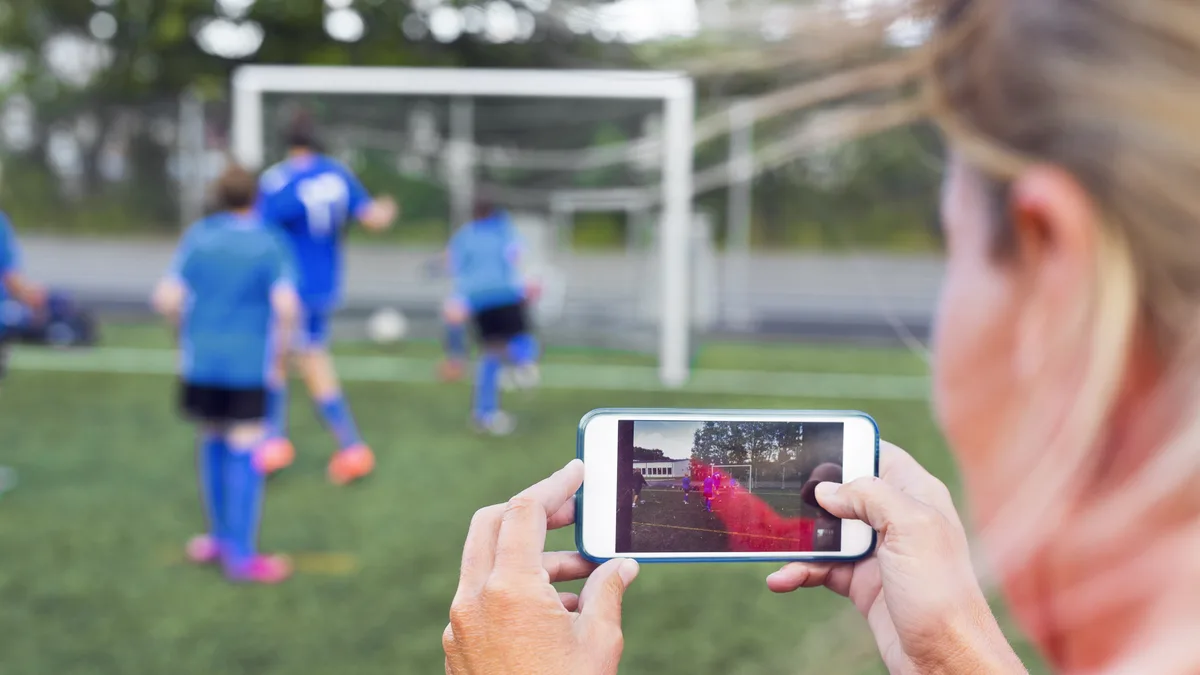
Starting a live stream from a phone takes a minute: an app, an account, a button. That is the easy part, and it is the one the tutorials show. The hard part starts at the tenth minute, when the bitrate drops, the device heats up, and the volunteer who was only supposed to “start the stream” has not seen the match.
The network: what you need and what you have
A 720p live stream needs between three and five megabits per second of upload, continuously, for two hours. The figure shown by a speed test at the side of the pitch is the download one; upload is often five times lower. And the mobile network is shared: two hundred spectators checking their phones at half-time divide the available bitrate.
- Outdoors, in a covered area: 4G or 5G generally hold, with dips. A second phone sharing its connection, on another operator, serves as a backup.
- Indoors: concrete walls and metal roofs cut the signal. Without the hall's wifi (and its password, obtained before match day) the stream will not hold.
- The test that counts: a ten-minute live stream, at the exact spot of the tripod, at match time, a week beforehand. A thirty-second test tells you nothing.
The phone that films and streams heats up twice
Encoding a video and sending it over the network at the same time is the heaviest thing a phone does. In the sun, it goes into thermal protection within twenty to thirty minutes: the stream drops in quality, then cuts out. The remedies are those of any recording (shade, case removed, external battery) with one more requirement: the device that streams must not be the one that serves as the archive. A stream that gets interrupted is annoying; a match lost because the only recording was the stream is worse.
Image rights move up a level
A video kept for the Tuesday session and a live stream open to the public are not the same thing, and a signed authorisation for the first does not cover the second. Three points to settle before the first stream:
- Minors: written authorisation from the parents expressly mentioning live streaming, with the right to refuse without consequence for the player. A refusal means the match is not streamed; blurring a child live is not an option, since it cannot be done.
- The opposing team: they have signed nothing. Warning the opposing club in writing before the match is the least you can do, and some refuse, especially for youth teams.
- Spectators and the referee: frame the pitch, not the stand, and do not comment on refereeing decisions live. The club is responsible for what its microphone says.
The general framework is that of filming minor players, with one more notch: what is streamed cannot be withdrawn.
One person, and nothing else to do
A live stream is not started and then forgotten. Someone has to watch the bitrate, reframe if the tripod moves, restart if it cuts out, and answer the parent who writes that “it isn't working”. That is a job of its own. The club that gives the stream to the assistant coach loses the assistant; the one that gives it to a keen parent loses them at the second rainy match.
When it is worth it
Live streaming is justified when people who matter cannot be there and the moment will not be replayed: a final, a tournament abroad, a team whose families live far away. It is also justified for a club that makes it a regular event and puts in the means: a dedicated camera, a reliable network, a person. For the ordinary league match, filmed by a parent, it costs more than it brings.
The alternative: the same evening
A video put online two hours after the final whistle gives families almost everything the live stream promised (seeing the match, the same day, from afar) without the network, the heat, the dedicated person, and with time to cut what should not be in it. Clubs that have tried live streaming often end up there: three clips sent to the group in the evening, watched ten times more than a live stream followed by twelve people. How to do it is in sharing videos with your players.
Frequently asked questions
What bitrate do you need for a live stream?
Three to five megabits per second of upload, continuously. Measure upload, not download, at the spot and at the time of the match, over ten minutes.
Can you stream a youth match live?
Only with written authorisation from the parents mentioning the live stream, the agreement of the opposing club, and the option to give up if a single one refuses. Many clubs choose not to do it with youth teams.
Are live streaming and video for analysis the same thing?
No. The live stream is compressed for the network and cut at the slightest dip. Always record on a second device if the video is to be used by the coach.
What kit do you need?
A phone dedicated to the stream, a tripod, an external battery, a second phone sharing its connection, and shade. The rest is network and a person.
By sport: Football · Rugby · American football
Read next
The same evening, in the group
TactiCam does not do live streaming. It keeps the clips at the moment you tap and shares them by link on match night, with the team and the families. 14-day trial, no bank card.