Blog › Filming
Filming a badminton match
In badminton everything moves fast and the court is small: a single well-placed phone sees both sides. The trap is wanting to follow the shuttle with the zoom. Here is how to frame so that you see the game, and not only the stroke.
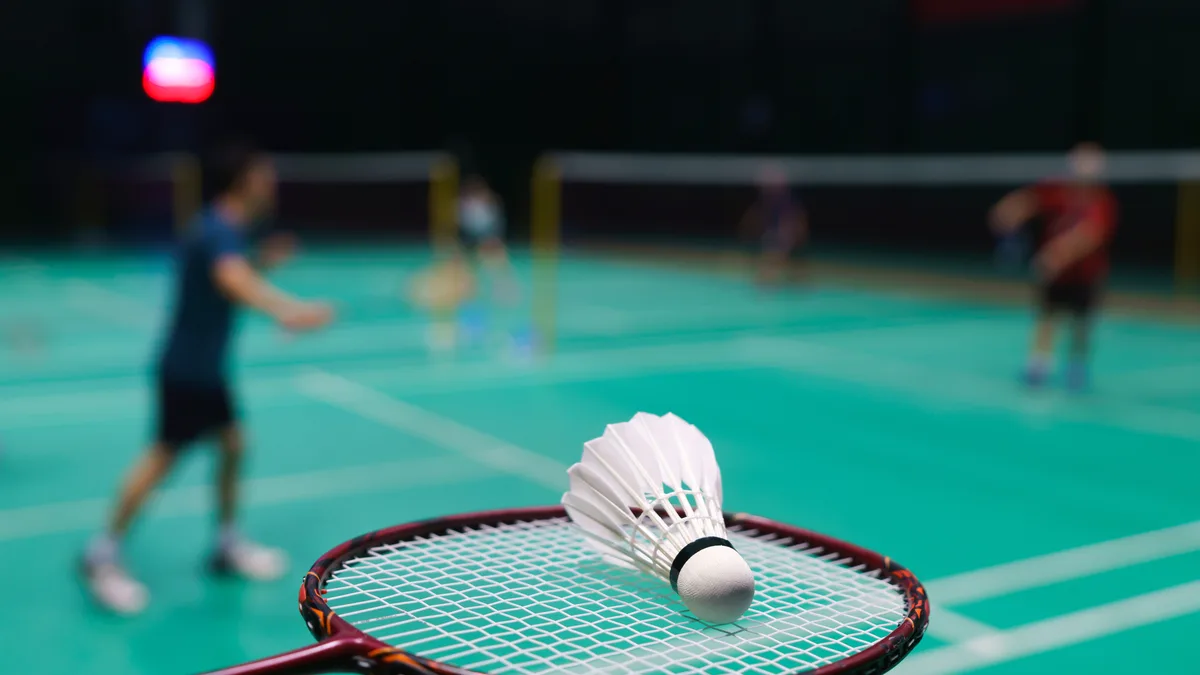
“How to film a badminton match?” The first results are mostly about rules, technique and PE worksheets; almost nothing on how to place your phone in a hall. Here is what works for a coach or a club player.
Where to put the phone
The court is narrow and long: the right viewpoint is high up, behind a back line or in the middle of a long side, rather than in a corner. From there you see both players (or both pairs), the net and the depth of the court. At floor level, players hide each other; a bench, a tier of seats or the top of a wall already makes a difference. The principle is the one in where to put the camera: height matters more than equipment.
Frame wide rather than following the shuttle
The shuttle changes direction in a fraction of a second. Following it with the zoom loses the action every few seconds and gives an image that moves. A fixed wide shot keeps both sides in the picture and shows what you are really looking for: positioning, movement between strokes, recovery time back to the centre. You then zoom in on replay on the rally that raises a question.
A dark hall, a white shuttle
In halls, the lighting is often uneven and the green or blue floor fools the exposure. Three habits help:
- Avoid windows in the frame: backlight turns players into silhouettes.
- Lock focus and exposure on the centre of the court, so that the image does not pump at each rally.
- Film at 60 frames per second if the phone offers it: a smash stays readable in slow motion on replay.
Singles or doubles: what you want to see
In singles, the video shows movement and use of space: where the player returns after each stroke, which corners they leave open. In doubles, it shows the pair's rotation: who takes the back, who attacks at the front, how the formation changes after a lob. In both cases, one question per sequence makes the session useful; the method is described in running a video session players really listen to.
Filming yourself to train
A player training alone can put their phone at the end of the court, to the side to see the stroke and the position of the feet. A side view for technique, a wide view for positioning: two short takes beat one long file. For tennis, the reasoning is the same, see filming yourself at tennis.
Reviewing and sharing the clips
With TactiCam, you film from the phone placed on its tripod, then find the rallies in the Video Room. You draw an arrow or a zone on a clip, add a sentence, and your doubles partner sees it on their own phone. The trial lasts 14 days, with no credit card.
Frequently asked questions
Where to place the camera to film a badminton match?
High up, behind a back line or in the middle of a long side: you see both sides, the net and the depth of the court.
How do you film a smash without a blurry image?
By filming at 60 frames per second if the phone allows it, in a well-lit hall, with a fixed wide shot rather than a zoom that follows the shuttle.
Can you film a badminton match with a phone?
Yes. The court is small: a recent phone on a small tripod, placed high, covers the whole game.
What should you look at in a badminton match video?
Positioning after each stroke, movement, and in doubles the pair's rotation. Choose one question per sequence.
By sport: Badminton · Tennis · Padel
Read next
Find your rallies and share them
Film with your phone, find every rally in the Video Room and send an annotated clip to your partner. 14-day trial, no credit card.