Blog › Filming
Filming an indoor handball match
Handball is played fast, in a short space, under hall lighting that is not made for cameras. Three decisions taken before the throw-off are enough to bring back a video in which you can read the game: the place, the light, and the wide shot above all.
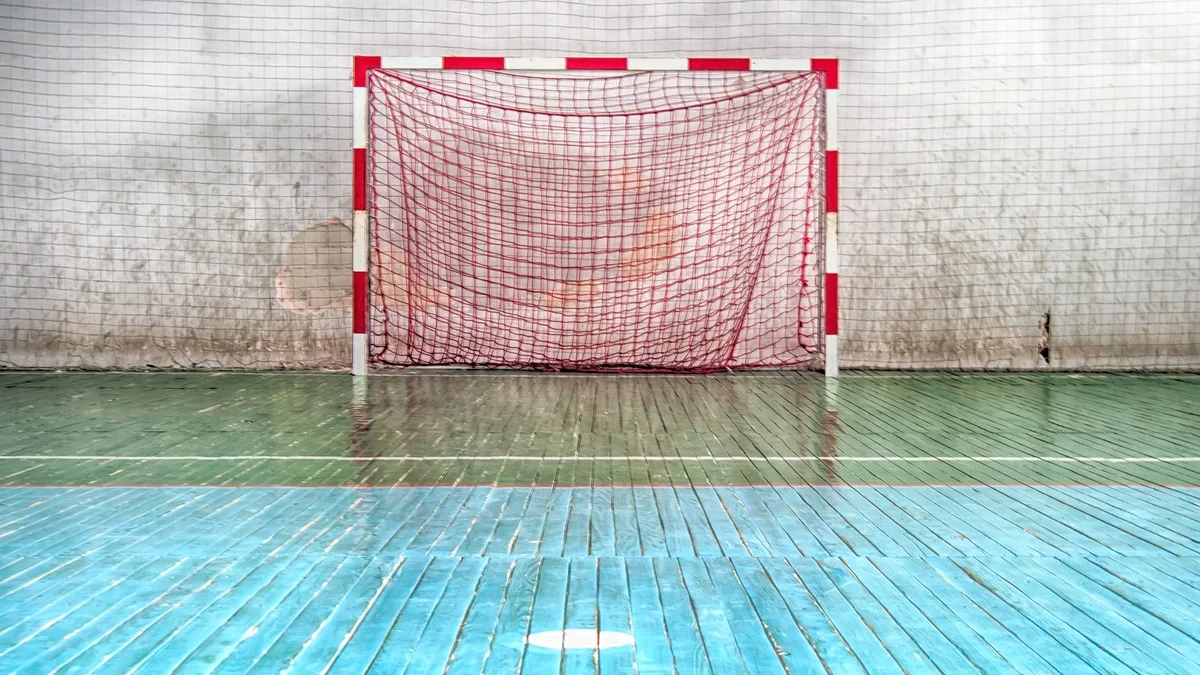
“What are the techniques for filming effectively?” “What kit do you need to film?” These two questions come up in every search about handball, most often with an answer in the form of an automatic camera or a production setup. A coaches' forum asks the question in its most honest form: two cameras, one wide shot and one tight shot, for a club budget. A well-placed phone already answers half the need.
In the stands, in the centre, as high as possible
The court measures about forty metres by twenty, and the hall offers what football lacks: stands, hence height. The best spot is on the side, level with the halfway line, on the highest accessible row. From there, a single frame holds both goal areas and shows what a coach looks for: the defence stepping up or dropping back, the gaps between players, a lane opening for the winger.
Behind a goal, you see the shot very well and everything else very badly. At floor level, players hide each other. The principle is the same as for other sports, detailed in where to place the camera: height matters more than kit.
Keep the whole court, do not follow the ball
In handball, the action changes end within a few seconds. A tight frame following the ball always misses the counter-attack that starts while you are on the shot. A fixed wide shot is better: it keeps both halves of the court, and you then watch it focusing on one zone. Zooming is done when viewing, not during the match.
That also answers the question of the second shot. A tight shot on the goal is only worth it if someone else can hold it for the whole match. Otherwise, the wide shot is enough, and it will be more useful than two medium shots.
Hall light, nets and reflections
Sports halls are lit for the players, not for images. Three pitfalls come back:
- Glass walls: a phone facing a window goes into backlight as soon as the light changes. Position yourself so that the light comes from the side or from behind.
- Shiny floor: it reflects the ceiling lights and creates white patches. A slight change of angle is often enough to make them disappear.
- Protective nets: a phone pressed against a net becomes blurred. Position yourself in a clear space, or put the lens right between two meshes if you have no other choice.
A moderately lit hall gives a grainier image than a pitch in full daylight. The device is not at fault, and it does not get in the way of reading the game: you see the movements, the distances, the trajectories.
The phone that holds on its own for sixty minutes
A handball match lasts sixty minutes, half-time included. A phone that heats up, fills up or switches off in the middle of a half is the most common failure. Before the match: free space, full battery, airplane mode, and a small tripod or a clamp that holds on the stand's rail. If possible, an external battery plugged in so you do not have to think about it.
Review what matters, not the whole match
In handball, the useful moments number in the dozens: a shot, a turnover, a badly aligned defence, a missed free throw. Reviewing sixty minutes to find them discourages everyone. It is better to mark the sequences during the match or just after, and review only those. The method is described in finding the key moments in a match video.
Frequently asked questions
Where should you put the phone to film a handball match?
In the stands, on the side, level with the halfway line and on the highest accessible row. The fixed wide shot keeps both goal areas.
Do you need two cameras to film handball?
Not to start with. One well-placed wide shot is enough. A second, tight shot on the goal is only worth it if someone can hold it for the whole match.
How do you handle the light in a sports hall?
By avoiding filming facing glass walls, changing angle slightly to escape floor reflections, and accepting a slightly grainier image.
What kit do you need to film a handball match?
A recent phone, a small tripod or a clamp fixed to the stands, and an external battery to last sixty minutes.
By sport: Handball · Basketball · Volleyball
Read next
Keep the actions, not the half
With TactiCam's Recall Mode, one tap after the shot keeps the previous seconds. The sequences are found in the Video Room, with no need to review the whole match. 14-day trial, no bank card.